
JP Alorwu
info@jpagroup.org
(Author, Ghostwriter, Youth Development Coach)
“Until the lion learns to write, every story will glorify the hunter.” — African Proverb
Confidence, for the African youth, is not just a personality trait. It is a product of systems. It is shaped by narrative, environment, and intentional design. The stories that shape African youth have been externally framed, culturally diluted, and structurally limiting. The result is a quiet but powerful misalignment between identity and expression.
In my work as a youth development coach, one pattern is consistent: many African youth are not inherently insecure. They are underexposed to systems that affirm who they are, challenge them to grow, and give them permission to express themselves.
If confidence is to become widespread, it must be built deliberately—not treated as an abstract virtue, but as a structured outcome.
System 1: Identity & Cultural Grounding
“I know where I come from, and it is not small.” 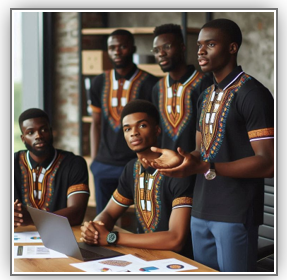
At its core, confidence is rooted in identity. A young person who does not know who they are will inevitably seek validation from external systems, many of which were never designed to affirm them.
African youth must be grounded in their history, cultural narratives, indigenous knowledge systems, and language. When a child grows up encountering excellence only in foreign contexts, they subconsciously internalize limitation. But when they are immersed in African excellence, both past and present, they begin to see themselves as extensions of possibility.
Language plays a critical role in this grounding. The ability to think, express, and dream in one’s native or cultural language creates deeper psychological ownership of identity. Storytelling, through literature, oral tradition, and modern media, then becomes a tool of restoration.
”Confidence grows when a young person can say, without hesitation: “I know where I come from, and it is not small.”

System 2: Voice & Expression
“We must raise young people who are thoughtful, articulate, and courageous in expression.”
In In many African homes and institutions, obedience is rightly valued. However, it is emphasized at the expense of expression. Children are taught to listen, comply, and respect authority, but not always to think aloud, question constructively, or express themselves confidently. The result is a generation that knows what to do, but struggles to express what it thinks.
Confidence is built through expression; when a young person shares an idea and is heard, asks a question and is engaged, or disagrees and is guided rather than silenced. Voice is not just a skill; it is a muscle. It strengthens with consistent use. This means safe environments for expression must be intentionally designed in classrooms, homes, faith communities, and youth development spaces. Platforms such as debates, storytelling sessions, journaling, discussions, and the creative arts are not extracurricular but developmental necessities.
We must move beyond raising children who are well-behaved to raising young people who are thoughtful, articulate, and courageous in expression.
 System 3: Exposure & Representation
Proximity to possibility changes everything.
Exposure shapes expectation. When young people consistently see individuals who look like them achieving excellence, their mental ceiling expands. Mentorship plays a critical role here. It bridges the gap between potential and reality by providing guidance, accountability, and real-life modelling.
Beyond formal mentorship, representation must exist at every level—through books by African authors, visible African professionals, and local success stories within communities.
A young girl who meets a writer, scientist, or leader who shares her background will begin to recalibrate her sense of identity. A young boy who sees disciplined, purpose-driven African men will begin to redefine masculinity beyond stereotypes. Confidence is reinforced when the future feels familiar.
This is why institutions like the Pan African Writers Association are critical, not only for literature, but for shaping identity narratives across the continent.
A Collective Responsibility
Raising confident African youth is not the responsibility of one group, it is a continental mandate. It is the responsibility of the parent who chooses to listen, not just instruct, the teacher who encourages thinking, not just repetition, the mentor who models discipline and possibility, the policymaker who designs systems for relevance, not convenience, and the storyteller who reclaims African narratives with truth and depth.
Confidence is not accidental. It is built layer by layer, system by system, voice by voice. If we are intentional, we will not just raise confident individuals, we will raise a generation that knows who it is, speaks with clarity, and builds with conviction. That is the Africa we must commit to.